
Sports Broadcasting Enters the Era of "Human-Feel" PTZ Control
Beach Volleyball × Multi-Cam AR × RCT FR-2 Deployment — MIXI
Key Takeaways
• Achieved "multi-cam AR" production combined with remote PTZ camera control for a live beach volleyball broadcast
• The intuitive operability of the RCT FR-2 introduced a new option for sports video production
• Stable remote operation realized despite the triple constraints of bad weather, small crew, and temporary outdoor venue
• Quote from the operator on set: "I forgot I was even operating a PTZ"
PTZ Camera Operation Is Changing on the Sports Production Floor
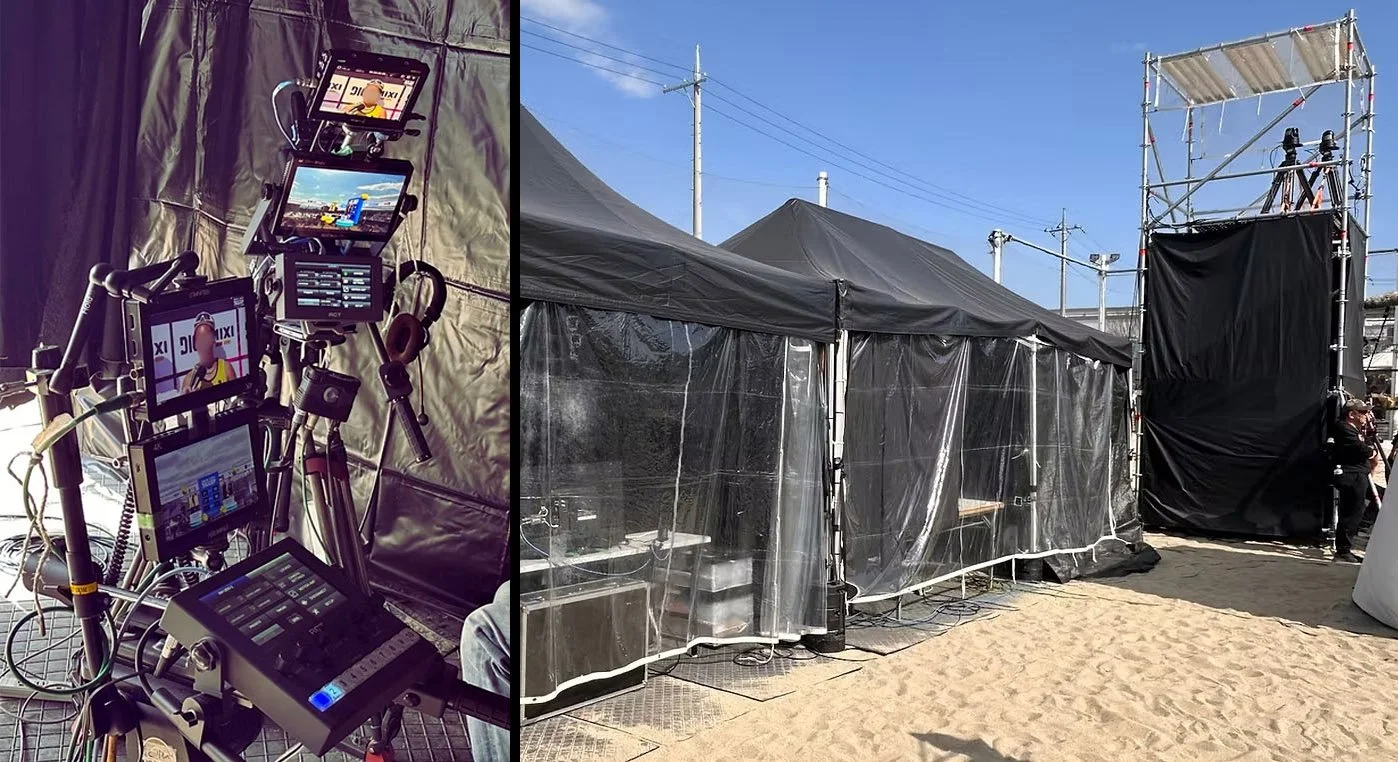
A beach volleyball court was set up on sand. At the "DIG CUP" tournament held on March 14–15, 2026, at TACHIHI BEACH in Tachikawa, Tokyo, a production team took on the challenge of delivering a multi-cam AR live stream — with no permanent grandstands, no fixed camera positions, and nothing but sand underfoot. Working from tents and mobile temporary scaffolding, the team relied on the RCT FR-2, a remote PTZ camera controller, as a key component of the operation.
We spoke with the production team involved in MIXI’s beach volleyball streaming project about the challenges they faced before deployment, how the equipment performed on the day, and where they see things going next.
Three "Multi-Cam AR" Challenges: Sand, Weather, and Ersatz Infrastructure
The central goal of this broadcast was "multi-cam AR" — seamlessly blending the real court space with virtual objects. Switching between multiple cameras while making AR objects appear to physically exist on the court demanded not only technical precision, but a high standard of camera movement itself.
The venue was a beach court with no permanent seating and no fixed camera platforms. Temporary scaffolding was erected to achieve overhead angles, and plastic boards were laid on the sand to support the structure. The outdoor environment also posed challenges for the AR system itself; CG equipment was set up inside vehicles to protect it from sand, wind, and humidity.
Speaking about remote operation from inside the tent, a member of the technical staff noted:
"Because we were operating remotely from inside the tent, we were able to work without being affected by the weather — and that was very well received."
This wasn’t just about comfort. It also contributed directly to AR quality. With only cameras mounted on the scaffolding — and operators controlling them from the ground — there was no risk of body movement or wind-induced shake from a cameraperson on the structure. Keeping the camera position stable is critical when overlaying AR objects onto a real space, and remote operation proved beneficial not only for weather protection, but for maintaining AR accuracy.
The camera configuration consisted of an overhead PTZ from the side of the court (operated via FR-1), a vertically oriented PTZ (operated via FR-2), two manned cameras, and a compact camera positioned at the net. PTZ cameras formed the backbone of the multi-cam AR coverage, while the manned cameras provided close-ups, facial expressions, and dynamic action shots — a clearly defined division of roles.
Limitations of Conventional PTZ Control in Sports Production
For this team, remote PTZ operation itself was not new. However, a production combining live sports coverage with AR required a more nuanced, intuitive level of camera movement than anything they had attempted before.
Looking back, the production team described the situation:
"We had been using a joystick-type remote controller for PTZ operation, which placed limitations on our camera movement and made it difficult to fully keep up with the pace of sports action."
In AR production, the quality of camera movement directly determines the quality of the visual output. If the camera can’t accurately track the action, it affects how well AR objects align with the scene and how convincing the effect feels. The team recognized that their existing setup left room for improvement given the demands of this project.
That perception changed significantly when they first tried the RCT FR-2.
"When we first tested the FR-2, we immediately noticed that it allowed us to follow the action in a way that felt much closer to physically operating a camera. The first time we used it, we were genuinely surprised by how natural it felt."
It wasn’t simply about the ability to operate remotely — it was the sensation of handling the camera as if working a real pan bar. That was the decisive factor in choosing the FR-2 for this production.
"I Forgot I Was Even Operating a PTZ"
Three test shoots were conducted on the court before the live event. What stood out was that almost no instruction was needed for the camera operators.
A member of the on-site staff described the first impressions:
"I handled the device configuration myself, but the camera operators were able to use it without any special explanation. It felt close enough to conventional camera operation that they adapted immediately."
One comment from the team during testing captured the essence of the FR-2:
"Without the FR-2, we wouldn’t have taken this job."
This was more than a compliment. Normally, operating a PTZ remote controller carries the constant awareness of “actuating a machine.” When that feeling fades from consciousness, it means the operator is fully focused on the camera work itself — and in sports production, that difference is significant.
Another staff member offered a more specific assessment:
"Diagonal movement was incredibly smooth. It was a huge improvement over what we had been using before, and being able to reset my position with a single button press was really convenient."
There was also strong enthusiasm from the team to explore the FR-2’s capabilities further — including pan bar sensitivity adjustment and camera position recall. The breadth of existing features left the team feeling there was significant room to deepen their use of the device in future productions and they also expressed hopes for further improvements and feature expansions going forward.
Ball Trajectories, Zoom-Ins to Player Photos: Advanced AR Effects Made Possible
The introduction of the RCR FR-2 expanded the range of creative expression available to the team.
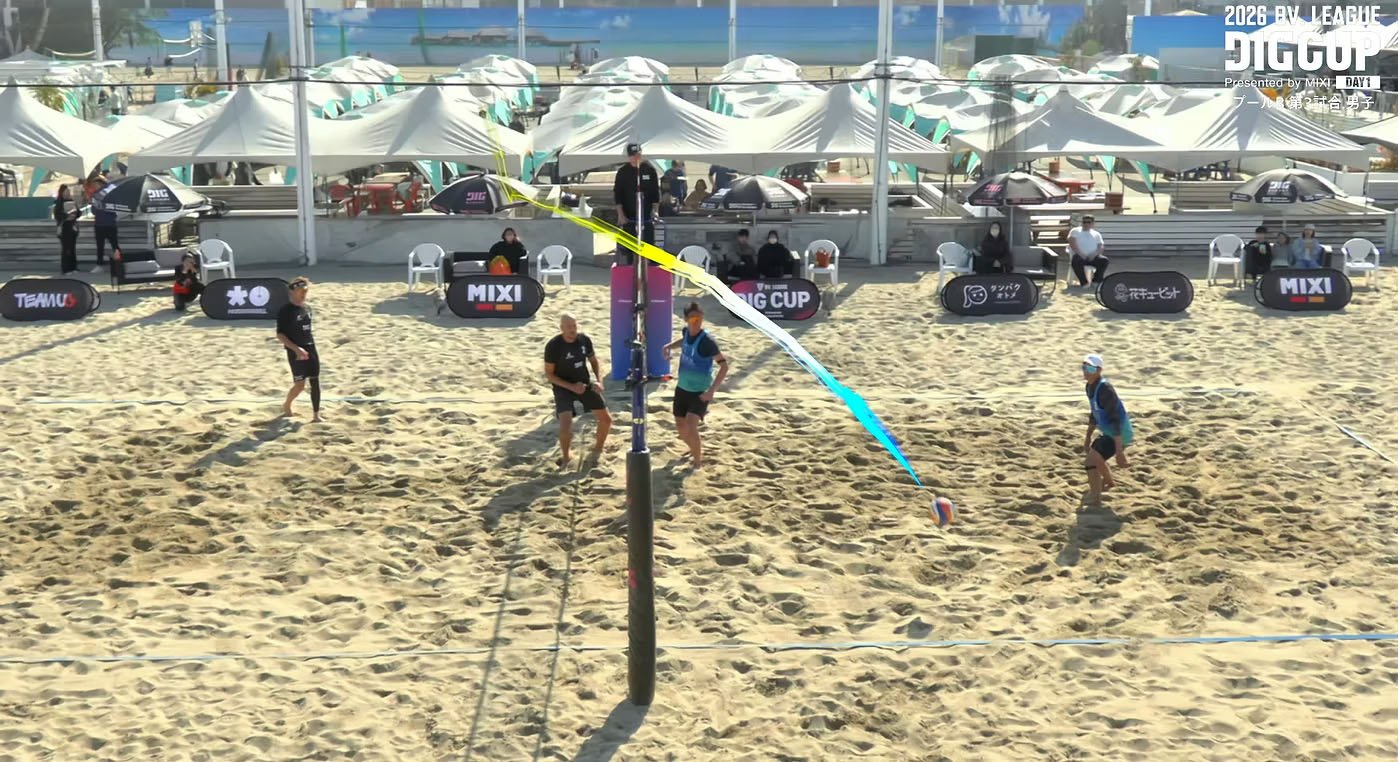
For this broadcast, AI-based real-time ball tracking was implemented, with accurate occlusion (depth layering) maintained even when AR objects overlapped with the ball. During replays, ball trajectory lines were displayed to visually communicate in/out line calls — an effect that received strong praise from all involved.
"The ball trajectory display was particularly effective — it really made an impact."
The team also achieved smooth, natural zoom-ins to player photos and CG volleyball avatars displayed as AR objects, executed at speeds that felt completely natural within the footage. This kind of effect depends entirely on the reproducibility and fluidity of camera movement.
"Without the FR-2, this type of shooting would not have been possible, and the advanced AR effects we achieved could never have been realized."
The FR-2 also proved its value for lean-crew operations. Even without a Video Engineer (VE) present on site, white balance, iris, and ND settings could all be controlled directly from the FR-2.
"In small-crew situations, being able to handle all camera settings from a single point is a significant operational advantage."
Looking Ahead: A New Option for Small-Crew Productions
Through this experience, the production team came away with a strong sense of future potential in combining PTZ cameras with the FR-2.
One example is the compatibility with AR production. By presetting specific frame sizes to match AR objects and switching between them quickly at the right moment in the production — then transitioning seamlessly into live camera movement — the team found this workflow effective and validated its usefulness in this production.
"The ability to control multiple cameras from a single FR-2 unit is a major advantage. One camera operator managing multiple cameras is a significant benefit when production budgets are tight for smaller events."
Particularly in productions constrained by staffing or setup conditions, this kind of configuration has the potential to significantly expand operational options. Going forward, the team plans to explore more flexible and efficient PTZ deployments, including cameras for interview setups and broadcast desk positions.
"For similar productions in the future, we would absolutely continue using PTZ cameras with remote control configurations."
Closing Thoughts
"At some point, I forgot I was even operating a PTZ camera."— This comment captured the spirit of the entire production. In sports video, what matters is not the presence of the equipment — it’s the ability of the operator’s intentions to flow naturally through it. The FR-2 demonstrated, in a real-world setting, that PTZ camera operation can come meaningfully closer to that ideal.
The insights gained from this challenging sand-and-weather environment open new possibilities for the use of PTZ cameras in sports broadcasting and AR production going forward.
Product Information
RCT FR-1 / FR-2
The FR-1 and FR-2 have been replaced with the FR-4.
PTZ Cameras
Panasonic AW-UE80